If your coffee maker is brewing slower than it used to, your coffee tastes flat or bitter, or you can see white crust around the water tank, it is time to descale. Minerals from your water (mostly calcium and magnesium) build up inside the heating element over time. That scale blocks water flow and stops the machine from getting hot enough to brew properly.
The good news: descaling takes about 30–45 minutes, costs almost nothing and can noticeably improve both the taste of your coffee and the life of your machine. Here is exactly how to do it.
Quick answer: Fill the reservoir with equal parts white vinegar and water (or a citric-acid or commercial descaling solution), run half a brew cycle, let it sit for 30 minutes, finish the cycle, then run 2–3 cycles of fresh water to rinse. Always check your manual first: some manufacturers, especially espresso machine brands, recommend against vinegar.
In this guide: Signs you need to descale · What to use · Step-by-step: drip coffee maker · Single-serve & espresso machines · How often to descale · FAQ
5 signs your coffee maker needs descaling
- Brewing takes noticeably longer than it used to.
- Coffee is not as hot as it should be.
- Coffee tastes bitter, flat or “off” even with fresh beans.
- You see white or chalky deposits in the reservoir or carafe.
- The machine is louder, sputters or leaves water in the reservoir.
What to use: vinegar vs. citric acid vs. descaler
| Solution | How to mix | Pros | Cons |
|---|---|---|---|
| White vinegar | Equal parts vinegar and water | Cheap, easy to find | Strong smell; needs extra rinsing; not recommended by some brands |
| Citric acid | About 1–2 tablespoons per quart (liter) of warm water, fully dissolved | Odorless, effective, inexpensive | Need to measure and dissolve |
| Commercial descaler | Follow the label | Formulated for coffee machines; often required by espresso and pod brands | Costs more |
How to descale a drip coffee maker, step by step
- Empty and clean: discard any coffee and filters, then wash the carafe and brew basket.
- Mix your solution: fill the reservoir with equal parts white vinegar and water, or a citric-acid or commercial descaling solution.
- Start a brew cycle: put the empty carafe in place (no coffee or filter) and run the machine until about half the reservoir has brewed through.
- Let it soak: turn the machine off and let the solution sit for 30–60 minutes to dissolve the scale.
- Finish the cycle: turn it back on and let the rest of the solution brew through. Discard it.
- Rinse thoroughly: run 2–3 full cycles with fresh, clean water until there is no vinegar smell or taste.
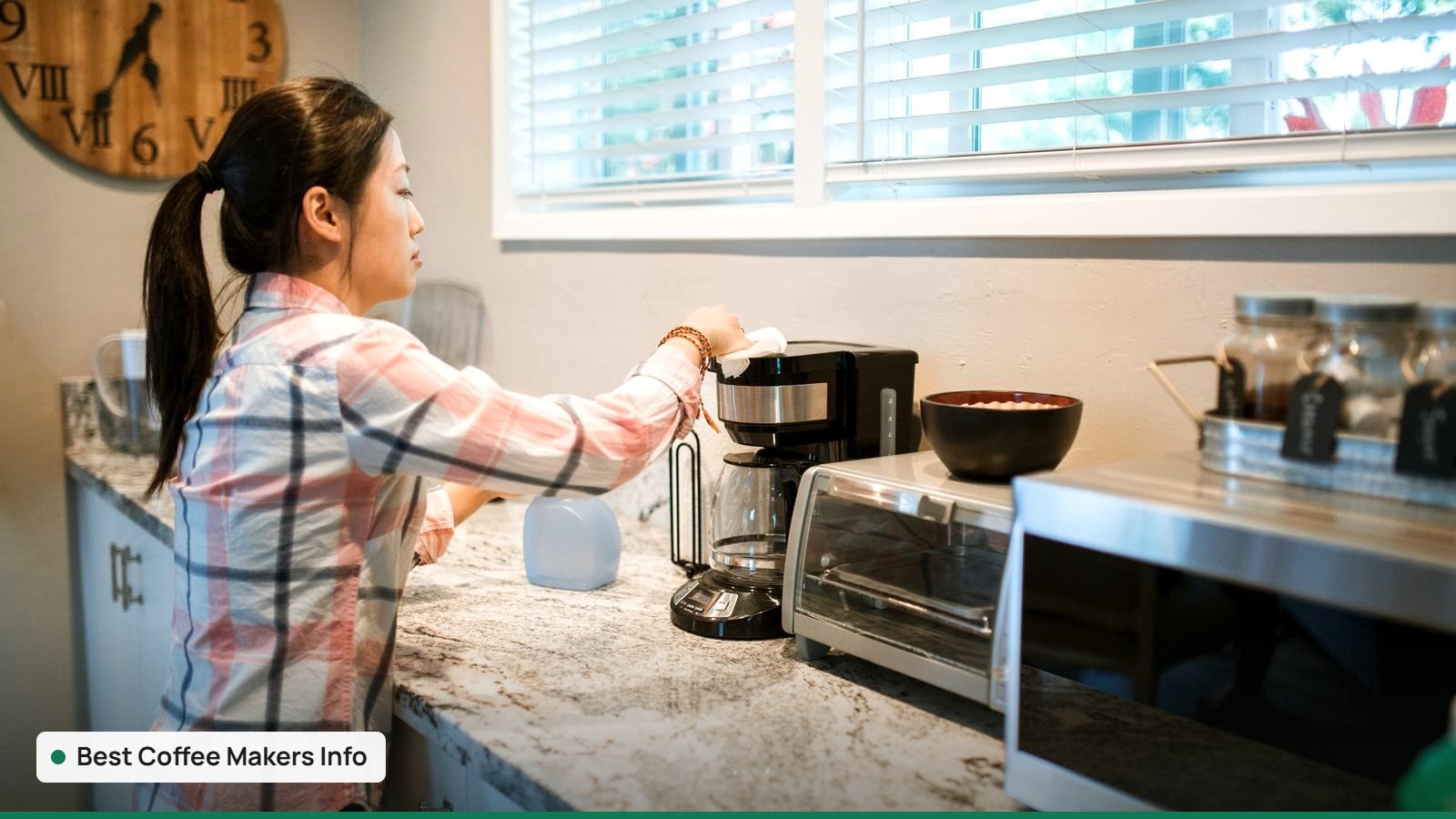
- Wipe down: clean the outside, the warming plate and the shower head area with a damp cloth.
If your machine has a “clean” button or indicator light, use that cycle and follow the manufacturer’s directions instead of the manual steps above.
How to descale single-serve and espresso machines
Keurig and other pod coffee makers
Empty the reservoir, remove any pod, then fill the reservoir with descaling solution. Run cleansing brews (largest cup size, no pod) until the “add water” light comes on, let the machine sit for about 30 minutes, then rinse with at least 12 fresh-water brews. Many pod brands sell their own descaler and recommend it over vinegar.
Espresso machines
Espresso machines have boilers, valves and seals that can be damaged by vinegar. Use the descaler your manufacturer recommends and follow its descaling program exactly, which often includes running solution through both the group head and the steam wand. If you use an espresso machine daily, see our beginner espresso guide for more maintenance tips.
How often should you descale?
| Water type | How often you brew | Descale every |
|---|---|---|
| Soft or filtered water | Once a day | 3 months |
| Average tap water | Once a day | 1–2 months |
| Hard water | Daily or more | Every month |
| Any water | Several pots a day | Every 2–4 weeks |
Using filtered water slows scale buildup significantly and can also improve flavor.
Daily cleaning habits that help
- Rinse the carafe and brew basket after every use.
- Leave the reservoir lid open after brewing so it can dry and does not grow mildew.
- Wash removable parts in warm, soapy water once a week (check if they are dishwasher-safe).
- Replace water filters on schedule if your machine uses them.
Shopping for a new machine instead? Look for removable parts and easy-access reservoirs in our best drip coffee makers guide.
Frequently asked questions
Can I descale a coffee maker with vinegar?
Yes, most drip coffee makers can be descaled with a 50/50 mix of white vinegar and water. Rinse with 2–3 cycles of fresh water afterward. However, some manufacturers, especially espresso and pod machine brands, recommend their own descaler instead, so check your manual first.
How long does it take to descale a coffee maker?
About 30–45 minutes for most drip coffee makers, including soaking time and rinse cycles.
What happens if you never descale a coffee maker?
Scale buildup slows brewing, lowers brewing temperature and makes coffee taste flat or bitter. Over time it can clog the machine and shorten its life.
Is citric acid better than vinegar for descaling?
Citric acid is just as effective for most machines and has no strong smell, so it needs less rinsing. Both are inexpensive options for drip coffee makers.