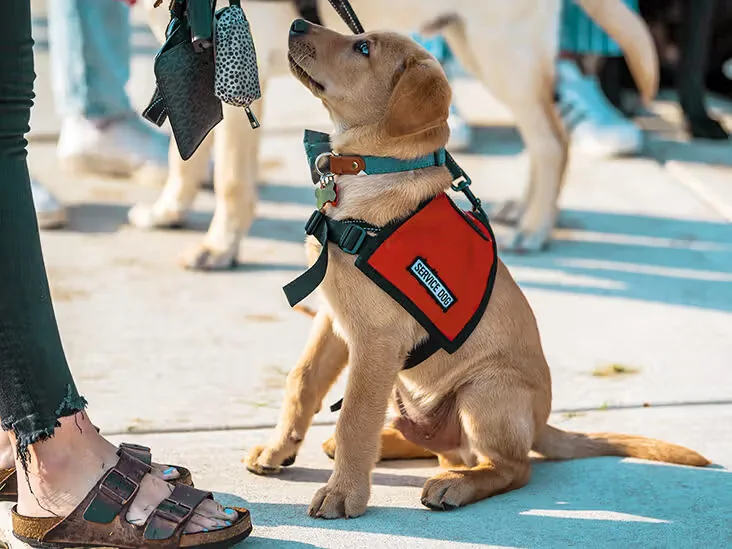
When a sudden wave of sleepiness can strike without warning, a trained dog can be more than a companion — it can be a lifeline. A growing number of people with narcolepsy are partnering with service dogs trained to interrupt sleep attacks, block unsafe situations, and summon help. The movement is still niche, but its impact on owners is anything but.
These animals learn to respond to the earliest signs of an episode: nudging, pawing, or standing between their handler and danger until alertness returns. Some are trained to retrieve a phone, turn on lights, or alert bystanders during cataplexy. Sleep researchers note that beyond the practical protection, the constant vigilance a service dog provides can ease the anxiety that narcolepsy itself feeds, helping owners re-engage with work, school, and travel.
Getting one is not simple. Programs that train narcolepsy-specific dogs are limited, waitlists stretch for years, and costs can be substantial, with financial aid rarely guaranteed. Owners who choose owner-training or hybrid paths must invest hundreds of hours in consistency and socialization. Experts stress matching temperament to lifestyle: a high-energy dog in a cramped apartment helps no one. Public access rights under disability law protect working teams, though etiquette around questions and distractions remains a daily reality.
Living with the partnership takes adjustment. Handlers must budget time for feeding, grooming, veterinary care, and reading the dog’s own stress signals. Before applying, specialists advise consulting a sleep physician to define the tasks the dog should perform, researching accredited programs through assistance-dog associations, and honestly assessing housing and schedule. For many narcolepsy patients, though, the payoff is profound: a four-legged alarm clock that never sleeps on the job.